The lamp goes off while you sit on the sofa: motion sensor or presence sensor?
An ordinary motion sensor turns the lamp off when you sit still. A presence sensor is made for exactly that. How they differ and how to make lighting that doesn’t leave you in the dark.
- Level
- Intermediate
- Active time
- 30–90 minutes
- Home Assistant required
- Yes
You sit on the sofa with your phone or a book. After a few minutes the lamp quietly goes off, because you haven’t moved enough. You get up, wave your hand and the light comes back. That is what makes motion lighting annoying.
What you will get
- Clarity on when a motion sensor is enough and when you need a presence sensor.
- An automation for a lamp in a room where you sit still: it comes on when you walk in and goes off when you’ve left.
- Manual control that still works, and safe behaviour when the connection is lost.
What you need
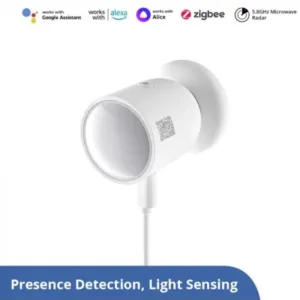
- Sonoff SNZB-06P: a Zigbee presence sensor. You need 1 piece per room.
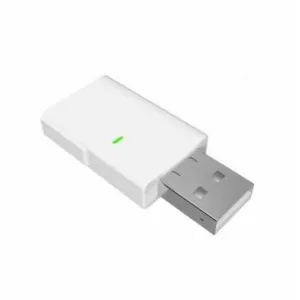
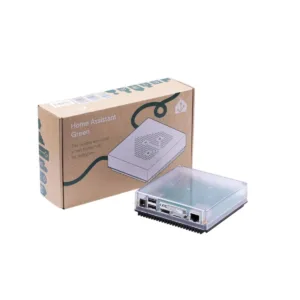
- You need a Zigbee hub or Home Assistant with a Zigbee adapter.
- A lamp that Home Assistant already controls: a smart bulb or a lamp behind a relay.
- A free spot for the sensor with a view of where you sit.
The time is about an hour for setup and two to three days of observation.
How it works
A motion sensor (PIR) reacts to change: a warm object that moves. If you sit still, after a while it “sees” an empty room.
A presence sensor is designed to detect a person even when they aren’t moving much. The manufacturer describes it as a presence sensor, not just a motion one. The specific range and sensitivity are in its documentation and are set during installation.
The automation is the same: sensor → the lamp comes on → when there has been no presence for a set time, the lamp goes off.
How it is at our place
In Marto’s Home Assistant, the kitchen uses a presence sensor and the “Sensor light” blueprint (by Blackshome), with the delay set to 5 and no colour control. The bathroom has a separate presence sensor with an automation for the lamp, and the wardrobe uses a motion sensor.
Steps
- Place the sensor so that it sees where you sit and doesn’t face a window or a fan. Follow the manufacturer’s guide.
- Pair it in Home Assistant. You should see an entity
binary_sensorfor presence. - Sit still and watch its state in Developer tools → States. That is how you make sure it sees you.
- Create an automation. An example with sample names:
alias: Living room – light by presence
triggers:
  - trigger: state
    entity_id: binary_sensor.hol_prisastvie
    to: "on"
    id: vlizam
  - trigger: state
    entity_id: binary_sensor.hol_prisastvie
    to: "off"
    for: "00:05:00"
    id: izlizam
actions:
  - choose:
      - conditions: "{{ trigger.id == 'vlizam' }}"
        sequence:
          - action: light.turn_on
            target: {entity_id: light.hol}
      - conditions: "{{ trigger.id == 'izlizam' }}"
        sequence:
          - action: light.turn_off
            target: {entity_id: light.hol}
mode: restart- Set the delay to your taste. Five minutes is an example; start with a longer one and shorten it.
- Add a darkness condition if the room is bright during the day. That way the light doesn’t switch on needlessly.
- Keep the wall switch or button working.
Checking the result
- Walk in and see whether the lamp comes on.
- Sit still for longer than the delay. The lamp should not go off.
- Walk out and wait for the delay. The lamp should go off.
- Take the sensor’s battery out. Automatic switch-off stops, so check that manual control of the lamp works.
If it doesn’t work
- The lamp goes off while you sit: the sensor doesn’t see you. Move it or change the angle.
- It comes on for no reason: it faces a window, a fan or a pet. Lower the sensitivity.
- It doesn’t go off: there is permanent presence. Look at the sensor’s history.
- No response: weak Zigbee connection. Move the sensor closer or add a mains-powered device between it and the adapter.
Limitations
Range and blind spots depend on the installation. If there are people lying in bed or a child lying down in the room, the sensor may not detect them accurately. With Home Assistant off, the lamp is controlled manually.
Sources and verification status
- ZHA, checked on 22.11.2026.
- Blueprints, checked on 22.11.2026.
- Automations, checked on 22.11.2026.
- The Sonoff SNZB-06P product page in the shop and the manufacturer’s documentation.
- Marto’s automations were read in read-only mode in his Home Assistant on 22.11.2026.
At home
Marto
In Marto's Home Assistant, the kitchen uses a presence sensor connected to the “Sensor light” blueprint for the kitchen strip, with a delay set to 5. The bathroom has a presence sensor, and the wardrobe has a motion sensor.
Need a hand?
We can set up and install everything in this project. In some regions we install it ourselves — ask us.
Contact us