A smart home that’s easy for the whole family: control without constantly taking out your phone
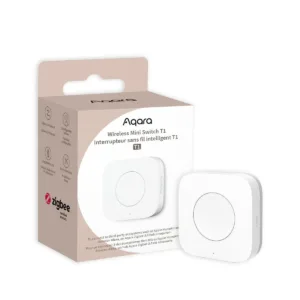
Wireless buttons in convenient places, each with one clear action, so that everyone in the family can control the home without a phone. The ordinary switches stay.
- Level
- Beginner
- Active time
- 30–60 minutes
- Home Assistant required
- Yes
A smart home works great as long as only one person in the family has the app. The others complain that to turn on a lamp they have to take out their phone. The goal is simple physical buttons that everyone understands without explanation, with the app and the automations staying behind them.
What we will get
A few wireless buttons in convenient places, each with one clear action: for example a single press for “Good morning”, a double press for “Everything off” and a long press for “Good night”. The ordinary light switches stay and work as before.
Boundary: we start with one button and one room. We add new ones only when the family uses it.
What we need
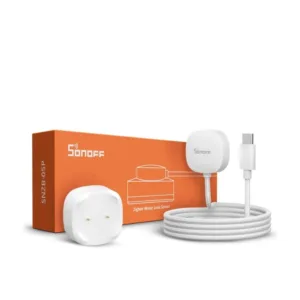
- Sonoff SNZB-01P — a Zigbee wireless button; one at each spot where we want control. It is wireless and needs no cables.
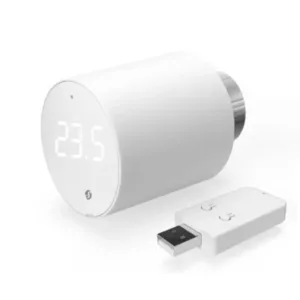
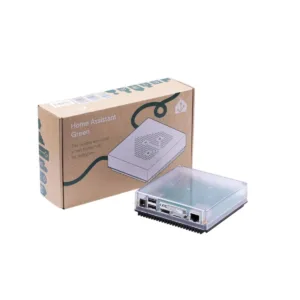
- Home Assistant with Zigbee (ZHA or Zigbee2MQTT).
- A few scenes or scripts in Home Assistant for the button to call.
- The agreement of the household on the spot and the actions. This is the most important part.
You need a Zigbee hub or Home Assistant with a Zigbee adapter.
Setup time: about 30 minutes for the first button. Then a week of observation: we see whether people use it and what is inconvenient for them.
How it works
The button sends an event: a single, double or long press. Home Assistant recognizes it as a device trigger and runs an action. If the action is wrong, we change it in Home Assistant without touching the button.
A rule for the family: no more than three actions per button, and the same everywhere. If a single press means the same thing on every button, people learn it in a day.
How it is at our place
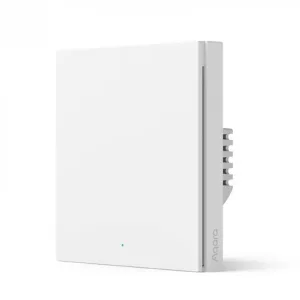
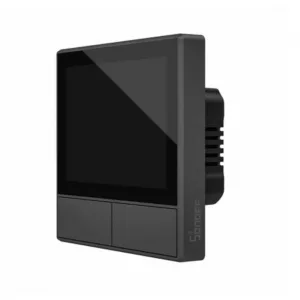
In Marto’s Home Assistant, control does not go only through the phone. There are buttons by the beds that switch the main lamp, the LED strips and the blinds in the bedroom, buttons in the kitchen and a switch for toggling the fan in the bathroom. The buttons are on different devices: wireless switches and IKEA BILRESA. Judging by the automation names, there are also extra actions for a double press and a hold: for example a double press raises the brightness of the LED strip in the bedroom to 100%, and a hold brings it down to 10%.
Steps
- We choose a spot that people already reach for instinctively: by the front door, by the bed, in the kitchen.
- We pair the button and check it in Developer tools. We expect an event for a single, double and long press.
- We decide what the three presses do and write them on paper for the family.
- We create an automation from the device: in Settings → Automations we choose “Create automation” → trigger “Device” → our button → the press type.
- We stick the button in place and show everyone how to use it. We don’t explain the technology, only what the button does.
- After a week we ask what doesn’t work and change it.
Checking the result
- Normal case: every family member uses the button without help.
- Edge case: a double press is recognized as two single ones. If that is the case, we increase the pause or replace it with a long press.
- Missing data: with a dead battery or Home Assistant off, the button does nothing. The lamp switch keeps working.
If it doesn’t work
- The button won’t pair → the hub is far away → for pairing we bring it closer.
- It lags or doesn’t respond → weak Zigbee signal or a dead battery → we check the network and the battery.
- Nobody uses it → the spot or the action is inconvenient → we move it or simplify the action.
Limitations
- Without Home Assistant and the Zigbee network the button does nothing. We keep the ordinary light switches.
- For children and adults the most important thing is predictability: the same action always in the same place.
- We turn off the button by deleting the automation or taking it off the wall.
Sources and verification status
Checked against the Sonoff and Home Assistant documentation, 22.11.2026, and a read-only reading of Marto’s Home Assistant (see ha-evidence).
At home
Marto
At home, buttons by the beds, in the kitchen and in the bathroom control lights, LED strips and blinds. Extra actions for a double press and a hold change the brightness of an LED strip.
Need a hand?
We can set up and install everything in this project. In some regions we install it ourselves — ask us.
Contact us