Five automations we really use every day
An overview of five short automations running in Marto’s home: a fan by humidity, a dryer, an air conditioner with an open window, front door locking and blinds after sunset. Each has a link to a detailed project.
- Level
- Beginner
- Active time
- 30–60 minutes
- Home Assistant required
- Yes
Most people with Home Assistant have dozens of automations, but only a few of them are felt every day. The rest are experiments. Here we look at five that are active in Marto’s home, and for each we say how it works, what we copy and how we switch it off.
What we will get
An overview of five short automations with simple logic: what triggers them, what they check and what they do. Each has a link to a more detailed project. The goal is to see what is “simple enough” before we start our own.
The project is an overview, has no single product and has no steps for new hardware.
What we need
- A working Home Assistant and whatever devices we want to automate: for each of the five ideas it is written which ones are needed.
- A willingness to observe for a few days and a manual way to override each automation.
How it works
Every automation in the list follows the same form: a trigger (what starts it), a condition (when to do nothing) and an action. Each also has a way to stop it: a switch, manual control or switching off from Settings → Automations.
An important caveat: these are the automations that are enabled in Marto’s Home Assistant on 22.11.2026. We don’t measure how often they run, so “every day” comes from the title and is not proven with data.
How it is at our place
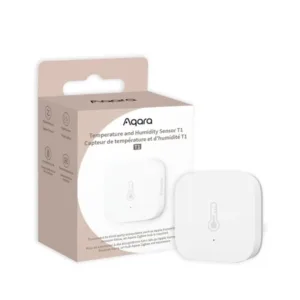
- A bathroom fan by humidity. The bathroom humidity blueprint tracks the rate at which humidity rises and switches the fan on on a fast rise or at an absolute threshold of 80%. It switches it off when the humidity drops. Details: the bathroom fan
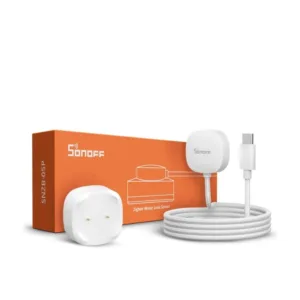
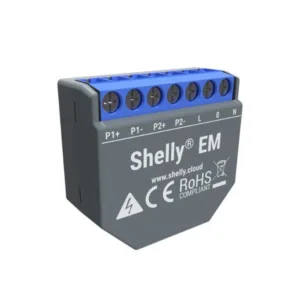
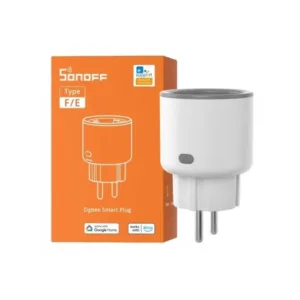
- The dryer starts the fan. When the power of the dryer’s plug goes above 10 W, the pantry fan switches on. When the power falls below the same threshold, it switches off. Details: the dryer controls the ventilation
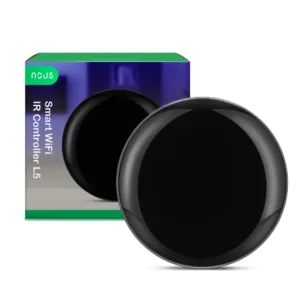
- The air conditioner stops with an open window. If a window stays open for five minutes, the air conditioner’s state is saved and it is lowered to 20 °C when heating or switched off. When the windows close, the saved state is restored. There are such automations for the living room, the bedroom and the children’s room. Details: open window and air conditioner
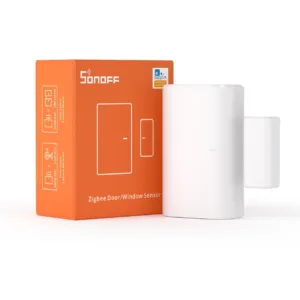
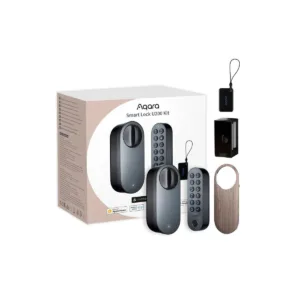
- The front door locks by itself. When the door is closed and the lock is unlocked for ten minutes, the lock locks. A backup trigger every five minutes covers a Home Assistant restart. Details: automatic locking
- The bedroom blinds close in the evening. One hour after sunset the blinds in the bedroom zone close. Details: smart blinds
What the five have in common: few conditions, one action, and a way to see why they fired. None of them tries to “guess” what we want.
Steps
- We choose one of the five for which we already have the devices. We don’t start with all of them at once.
- We read the link to the detailed project and write down the devices needed.
- We build the automation with the example values (all thresholds in the articles are examples) and observe first.
- After a few days we change the threshold if needed and add a manual override.
- Only then do we choose the next one.
This is what the simplest of the five looks like, closing the blinds after sunset. It is a simplified example following the form of Marto’s automation, not a copy of it; the zone is an example.
# Example: blinds down an hour after sunset. The zone is an example.
alias: Blinds down after sunset
triggers:
  - trigger: sun
    event: sunset
    offset: "01:00:00"
actions:
  - action: cover.close_cover
    target:
      area_id: bedroom
mode: single
Checking the result
- Normal case: after a few days we see in Traces that the automation has run and done what was expected.
- Edge case: we change the state by hand and see whether the automation fights us. If it does, we add a condition or a switch.
- Missing data: if the sensor is “unavailable”, the automation must not do anything rash.
If it doesn’t work
- It doesn’t run → the trigger wasn’t reached or the condition is false → we look at the automation’s Traces.
- It runs too often → the threshold is too low → we raise it.
- We do more than we expect → the automation is in “single” mode and skips repeats, or the opposite → we check the execution mode (mode).
Limitations
- This is an overview of our automations, not a complete guide. The detailed steps of each are in the linked project.
- The automations depend on Home Assistant. The switch, the door and the air conditioner also have ordinary control.
- We don’t keep automations that we can’t explain in one sentence.
- We switch each one off from Settings → Automations.
Sources and verification status
A read-only reading of Marto’s Home Assistant, 22.11.2026 (see ha-evidence), and the Home Assistant documentation.
At home
Marto
The five automations are enabled in Marto's Home Assistant as of 22.11.2026. The execution frequency has not been measured.
Need a hand?
We can set up and install everything in this project. In some regions we install it ourselves — ask us.
Contact us